Benchtop and solid-surface buyers I speak with are no longer debating whether to remove crystalline silica from their formulations; they are testing which alternative filler can keep existing vacuum-pressing and casting lines running without a plant rebuild.
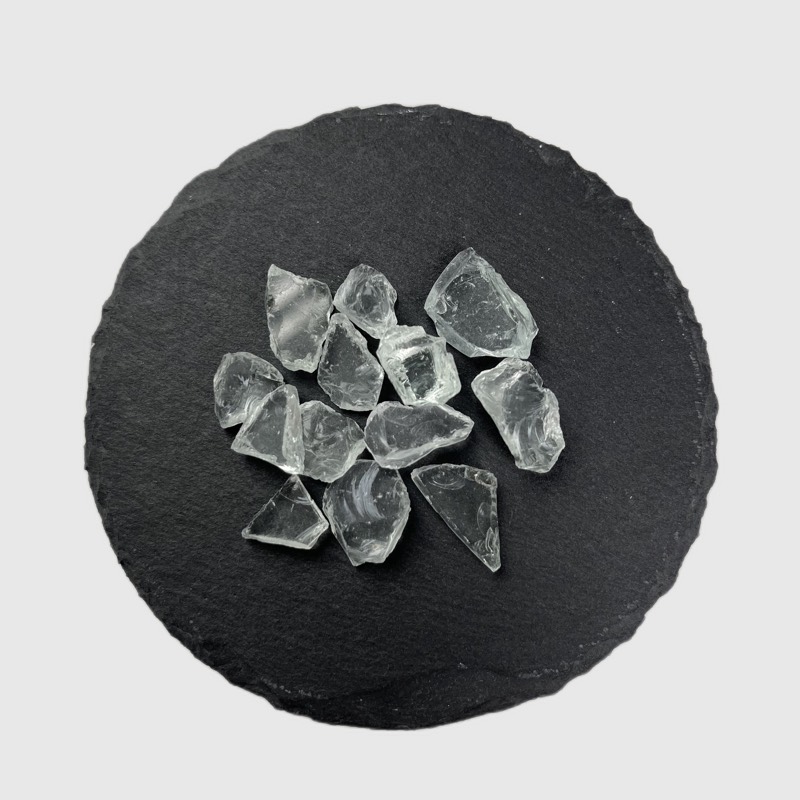
Amorphous recycled glass powder is emerging as that practical crystalline silica replacement. It is fully amorphous, chemically inert, and available in controlled particle sizes. Hamari supplies post-consumer recycled glass powder in standard 25 kg bags, shipped FOB Nansha, with fine grades suited to engineered stone and solid-surface compounding. Explore the full range on our glass aggregate products page.
Regulatory pressure is making low-silica engineered stone a market-access requirement.
Takeaway: Compliance is now a purchasing prerequisite, not a marketing badge.
- Australia prohibited the manufacture, supply, processing and installation of engineered stone benchtops, panels and slabs containing 1% or more crystalline silica from 1 July 2024, with an import ban following on 1 January 2025.
- The EU is tightening occupational exposure rules for respirable crystalline silica, with proposed binding limits that will push manufacturers toward reduced- or zero-silica formulations.
- California and several U.S. states are reviewing similar restrictions, so export producers are reformulating now to avoid future exclusion.
- Import and tender specifications increasingly require SDS-backed silica declarations before raw materials are approved.
Source: Silica Free News
Amorphous glass powder removes respirable crystalline silica from the safety data sheet.
Takeaway: Glass powder can mimic silica as a mineral filler while eliminating the regulated respirable crystalline silica hazard.
- Recycled glass powder is fully amorphous and free of crystalline silica, so it does not generate respirable crystalline silica dust during cutting, grinding or polishing.
- Crystalline silica has an ordered lattice and is classified by IARC as a Group 1 carcinogen when inhaled; synthetic amorphous silica is Group 3 — not classifiable as carcinogenic.
- Its Mohs hardness of ~5.5 is slightly below quartz (~7), reducing tool wear while still giving acceptable scratch resistance for benchtops.
- Typical specific gravity of 2.45–2.55 is close to silica, so resin loading and slab-weight calculations remain familiar to formulators.
Source: BSiO₂
Glass powder fits polyester, acrylic and epoxy solid-surface systems.
Takeaway: Recycled glass filler is compatible with the resin systems used in both engineered stone and solid-surface production.
- Quartz-free engineered stone formulations using glass sand, ceramic powder and 25–40 wt.% glass have achieved Mohs 5–7 hardness and flexural strength of 25–40 MPa.
- Fine grades such as 325 mesh improve mixing performance, surface gloss and filler dispersion in resin compounding.
- Glass powder can be blended with recycled glass chips and aggregates to create terrazzo-style visual effects in the same slab.
- Hamari can supply test batches in 25 kg bags so R&D labs can run side-by-side trials against current quartz fillers.
Source: PMC / NCBI — Engineered Stone and Silicosis
Leading producers are already commercialising low-silica and zero-silica surfaces.
Takeaway: The shift from quartz-rich to glass-based formulations is already proven at commercial scale.
- Major brands now market reduced-silica engineered stone with <40% crystalline silica, certified by independent testing bodies.
- Zero-silica / crystalline-silica-free products list recycled glass, aluminium trihydrate and organic fillers as major constituents.
- Solid-surface materials such as acrylic-based surfaces have historically contained no crystalline silica and remain unaffected by the Australian engineered-stone ban.
- Buyer action: audit formulations, request current-lot phase analysis, and lock particle-size specifications before running slab trials.
Source: Cosentino Silestone
How to qualify amorphous glass powder for your line.
Takeaway: Treat glass powder as a mineral filler, not just a decorative aggregate, and qualify it against your current quartz flour.
- Request particle-size distribution, moisture content, iron content and oil-absorption data from your supplier.
- Run casting or pressing trials measuring viscosity, cure time, flexural strength, water absorption and polish response.
- Verify phase analysis with a documented reporting limit and sampling basis, especially if you need to prove crystalline-silica-free status.
- Ask for TDS, SDS and a sample 25 kg bag to compare directly with your incumbent filler.
Frequently asked questions
Is amorphous glass powder really silica-free?
It contains silicon dioxide, but in an amorphous, non-crystalline structure. Respirable crystalline silica is the regulated hazard, and properly processed recycled glass powder is considered free of crystalline silica.
Can glass powder replace 100% of quartz in engineered stone?
It can replace a high percentage, often 30–50% or more by weight, depending on the resin system and performance target. Most producers blend glass powder with other low-silica fillers and glass chips to balance hardness and aesthetics.
Does it change fabrication or finishing processes?
Because the material is softer than quartz, cutting and polishing tools may last longer. Standard solid-surface and engineered-stone fabrication methods apply, with no silica-specific dust controls required for the glass component.
What documentation does Hamari provide?
Hamari can supply TDS, SDS and sample quantities in 25 kg bags for lab trials. Visit our about us page to learn more about our recycled glass processing, or contact us directly.
Ready to reformulate? Email info@hamari.cn to request TDS/SDS, samples and a quotation for amorphous recycled glass powder. Hamari ships FOB Nansha and can support benchtop, solid-surface and terrazzo producers moving toward low-silica formulations.
Is amorphous glass powder really silica-free?
It contains silicon dioxide, but in an amorphous, non-crystalline structure. Respirable crystalline silica is the regulated hazard, and properly processed recycled glass powder is considered free of crystalline silica.
Can glass powder replace 100% of quartz in engineered stone?
It can replace a high percentage, often 30–50% or more by weight, depending on the resin system and performance target. Most producers blend glass powder with other low-silica fillers and glass chips to balance hardness and aesthetics.
Does it change fabrication or finishing processes?
Because the material is softer than quartz, cutting and polishing tools may last longer. Standard solid-surface and engineered-stone fabrication methods apply, with no silica-specific dust controls required for the glass component.
What documentation does Hamari provide?
Hamari can supply TDS, SDS and sample quantities in 25 kg bags for lab trials. Contact info@hamari.cn to request documents or arrange a trial shipment.
Sources & Original Articles(来源 · 点击原文)
- 阅读原文:Silica Free News — What architects and interior designers need to know when specifying silica-free countertops (2026). Documents Australia’s 1 July 2024 engineered-stone ban and import ban timing.
- 阅读原文:BSiO₂ — Amorphous vs Crystalline Silica (2024). Explains structural, regulatory and IARC classification differences between amorphous and crystalline silica.
- 阅读原文:PMC / NCBI — Engineered Stone and Silicosis: The Unfinished Product (2024). Peer-reviewed summary of reduced-silica and zero-silica engineered stone formulations using recycled glass and other alternatives.
- 阅读原文:Cosentino Silestone — Silestone — Low Crystalline Silica Content (2024). Shows commercial-scale low-silica engineered stone certified by independent testing.
- 阅读原文:Applied Particle Technology — Crystalline vs Amorphous Silica: Why It Matters (2024). Compares crystalline and amorphous silica properties, analytical methods and regulatory exposure limits.
Related reading
For the latest on the Australia/EU engineered stone ban and why amorphous glass powder is the practical filler, read Amorphous Glass Powder: Low-Silica Engineered Stone Filler.