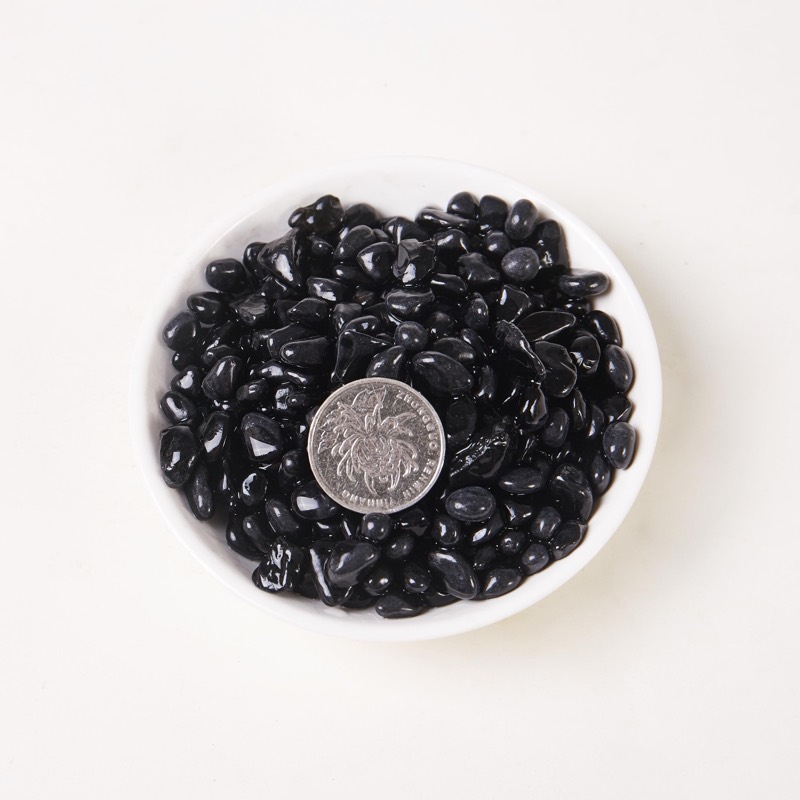
Water-feature and aquarium buyers rarely care what the aggregate is made of until it changes the chemistry or clogs the pump, which is why a clean, graded, chemically inert glass product is the safest specification to write.
Inert glass aggregate works across filtration, aquariums and decorative water features
Recycled glass behaves like a neutral ceramic: it does not rot, soften or release nutrients, so one material can serve filters, tanks and fountains.
- Glass is amorphous and non-porous, so it does not provide the organic pockets that harbor anaerobic bacteria in sand or organic mulches.
- Crushed glass filter media is reported to capture fine debris down to around 3 microns and can outlast silica sand in high-load systems.
Source: CND Installers - Advanced activated glass filter media grades can filter particles down to 1 micron while resisting bacterial growth inside the bed.
Source: AFM Glass Media - Borosilicate and quartz glass microfiber matrices are marketed specifically for their inert fiber composition and binder-free chemistry.
Source: International Filter Products
Grading and cleanliness decide whether glass works as filter media or substrate
Buyers should request a narrow mesh range and a washed, dust-free lot, because fines are what cloud water and jam pumps, not the glass itself.
- 1–3 mm chips suit aquarium bases and small feature basins where fish or invertebrates move through the bed.
- 3–6 mm and 6–9 mm fractions are better for pond filter layers and decorative stream beds where flow rate matters.
- Hamari supplies clear, mirror and coloured glass chips in these standard cuts, packed in 25 kg bags on an FOB Nansha basis. See the recycled glass aggregate product catalog.
- Incoming QC should check for paper labels, metal caps and ceramic residue; even small contaminants sink or block nozzles in feature systems.
Crushed chips and glass beads filtration use different pore and flow dynamics
Choose angular crushed glass for mechanical trapping and biofilm surface area; choose smooth glass beads for low-turbulence polishing and decorative topping.
- Angular recycled glass aquarium substrate gives nitrifying bacteria more surface area than rounded quartz gravel of the same nominal size.
- Smooth glass beads filtration creates less friction, so they are preferred in fluidized-bed polishing columns and visual water-feature surfacing.
- A research study on black mangrove restoration found that seedlings grown in glass sand showed comparable survival and biomass to those in natural dredge substrate, indicating chemical neutrality under saturated conditions.
Source: Wiley — Restoration Ecology - Either form should be pre-rinsed on site until runoff is clear; factory washing removes dust, but shipping abrasion can create a small amount of fines.
Coloured glass for water features adds visual depth without altering water chemistry
Pond designers use coloured glass chips because the colour is locked in the glass matrix and will not leach or fade like painted pebbles.
- Dark blues, teals and blacks disappear under water and make the bed look deeper; amber and clear reflect light for shimmering fountain bases.
- Landscape suppliers recommend tumbled or landscaping-grade glass for water features to avoid sharp edges and maintain long-term colour.
Source: US Rock - Coloured glass mulch does not decompose, so it retains its size and hue for years without adding tannins or organic load to the water.
- Hamari can blend colours to match a project palette, supplied as a single lot to avoid batch-to-batch shade drift.
What spec buyers should verify before shipment
Write the purchase order around mesh range, contaminant limits, packaging and Incoterms, not just colour.
- Ask for the actual sieve analysis, not just a nominal size; a 1–3 mm lot should have no more than trace below 0.5 mm.
- Confirm that glass is sorted by type: soda-lime clear/mirror, not mixed with borosilicate or leaded glass unless specified.
- Request 25 kg woven polypropylene bags or 1-tonne bulk bags depending on handling equipment at the receiving site.
- Clarify FOB Nansha terms and lead time so the material arrives before pond sealing or filter commissioning.
Buying questions
Is recycled glass aquarium substrate safe for fish and plants?
Yes, when the glass is clean, lead-free soda-lime cullet and washed to remove fines. Its inert surface does not alter pH or hardness, and it provides a stable rooting medium for aquatic plants.
What mesh size should I order for filter media versus decorative pond topping?
Use 1–3 mm for aquarium substrate and fine polishing, 3–6 mm for general filter layers, and 6–9 mm or a mixed decorative blend for stream beds and fountain surfaces.
Does coloured glass leach into pond or aquarium water?
No. The colour is part of the glass structure, not a surface coating, so it does not bleed or dissolve under normal aquatic conditions.
Can I get mixed colours or custom packaging for a landscape water feature?
Yes. Hamari can supply colour blends in 25 kg bags or bulk sacks on FOB Nansha terms. Contact the team through the contact page to discuss your project mix.
Ready to source inert glass aggregate for your next water treatment, aquarium or water-feature project? Email info@hamari.cn to request the TDS, SDS and a sample lot of recycled glass chips or beads. Standard grades are available in 25 kg bags on an FOB Nansha basis.
Is recycled glass aquarium substrate safe for fish and plants?
Yes, when the glass is clean, lead-free soda-lime cullet and washed to remove fines. Its inert surface does not alter pH or hardness, and it provides a stable rooting medium for aquatic plants.
What mesh size should I order for filter media versus decorative pond topping?
Use 1–3 mm for aquarium substrate and fine polishing, 3–6 mm for general filter layers, and 6–9 mm or a mixed decorative blend for stream beds and fountain surfaces.
Does coloured glass leach into pond or aquarium water?
No. The colour is part of the glass structure, not a surface coating, so it does not bleed or dissolve under normal aquatic conditions.
Can I get mixed colours or custom packaging for a landscape water feature?
Yes. Hamari can supply colour blends in 25 kg bags or bulk sacks on FOB Nansha terms. Contact the team through the contact page to discuss your project mix.
Sources & Original Articles(来源 · 点击原文)
- 阅读原文:CND Installers — Sand vs Glass Media: Which Filter Media Is Better for High Bather Load Pools 2026 (2026). Provides practical micron ratings and service-life comparisons for glass pool filter media.
- 阅读原文:AFM Glass Media — AFM Comparative (n.d.). States filtration capability down to 1 micron and bacterial-growth resistance for engineered glass media.
- 阅读原文:International Filter Products — Borosilicate Glass Microfiber Filters (n.d.). Describes the inert, binder-free composition of glass microfiber filtration matrices.
- 阅读原文:Wiley — Restoration Ecology — Glass sand as a substrate for black mangrove growth and survival (n.d.). Academic evidence that glass sand performed comparably to natural dredge substrate, supporting chemical neutrality claims.
- 阅读原文:US Rock — Creative Ways to Use Decorative Glass in Garden Design (2025-08-11). Explains underwater sparkle, tumbled landscaping-grade glass and non-degrading colour for water features.
Related Reading
- Recycled glass beads as aquarium and pond filter media
- Recycled glass filter media: aquarium and water feature aggregates
Related reading
For a focused guide on glass filter media for aquarium, pond and water-feature applications, see Glass Filter Media for Aquariums & Water Features.
2 thoughts on “Aquarium Filter Media: Glass Beads vs. Sand Substrate Guide”