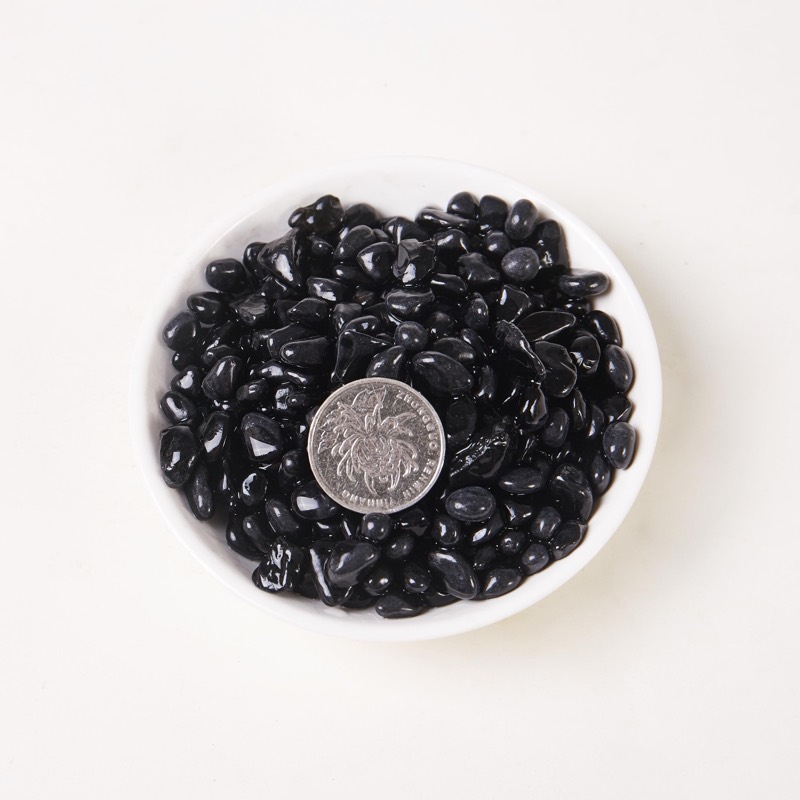
Most water-treatment buyers and aquascapers secretly worry less about “is it green?” and more about “will this batch alter my pH, clog my pump or look different six months after install.” Recycled glass answers all three at once: it is chemically inert, it does not leach carbonates into the water column, and a tightly graded batch keeps void spacing predictable across filters and decorative ponds.
Why inert glass aggregate works in living-water systems
Takeaway: Inert glass aggregate protects water chemistry because it releases almost nothing into solution.
- Clean soda-lime or borosilicate-derived glass is essentially non-reactive in fresh, brackish and marine conditions.
- Unlike limestone gravel, it does not buffer pH upward; unlike volcanic rock, it does not add iron or manganese.
- That stability matters in aquariums, aquaponics, koi ponds and constructed wetlands where chemistry drift stresses stock or biofilm.
- Academic work on glass sand and dredge substrates for mangrove propagation found comparable survival rates to natural sediment, supporting the idea that glass can serve as a functional, biologically compatible medium.
- For reef and marine tanks, confirm the batch is free of copper, lead or coloured-metal oxides that could become bioavailable; Hamari’s clear and standard coloured glass grades are formulated for decorative and filter use without metallic leachates.
Source: Wiley Online Library
Glass filter media vs. traditional sand and anthracite
Takeaway: Recycled crushed glass filters to a lower turbidity breakthrough and needs less backwash water than silica sand.
- Angular crushed glass chips trap particles on the surface and within the bed more efficiently than rounded silica grains.
- Lower bulk density (roughly 1.30–1.45 g/cm³) means filters can run at similar hydraulic loading with a lighter media load.
- A hardness near 6 Mohs gives the media long service life without excessive attrition fines.
- Industrial suppliers list water purification as a standard end-use for chemically inert crushed glass filter media.
- In pressure filters, a dual-media bed of coarse glass over fine glass or sand can extend run length and cut backwash volume by 15–25 % in comparable installations.
Source: Becens Minerals product technical page
Recycled glass aquarium substrate: what aquascapers and installers need
Takeaway: A safe aquarium substrate is washed, size-graded and free of sharp splinters, not just “recycled.”
- Look for mesh-graded glass in the 1–3 mm, 3–6 mm or 6–12 mm ranges depending on whether the application is foreground cap, under-gravel flow bed or sump media.
- Hamari supplies clean crushed clear, mirror and coloured glass chips and glass beads in 25 kg bags, shipped FOB Nansha.
- Request a TDS/SDS and a wet sample before specifying; colour fastness under UV and chlorine exposure should be confirmed for outdoor ponds.
- Browse the full glass aggregate product catalog for available chip sizes and bead diameters.
- Pre-washed, dust-free product saves rinsing time and avoids the cloudy water that unprocessed recycled cullet can introduce during tank filling.
Coloured glass for water features: design without maintenance regret
Takeaway: Coloured glass for water features delivers saturated colour that algae and hard water dull far less than painted stone.
- Glass colour is integral, so it does not peel or fade when exposed to fountain chemicals, salt spray or freeze-thaw cycles.
- High polish or tumbled beads reflect light under moving water, giving fountains, rills and reflecting pools visual depth with minimal lighting.
- It is a favourite for hotel courtyards, rooftop pools, spa water walls and public plaza runnels.
- Specialist coloured glass tubing suppliers note that borosilicate and resin-coated glass products are specified for both decorative and functional water-related installations.
- Because glass is non-porous, it resists organic staining and can be pressure-washed or acid-rinsed without losing colour, reducing long-term maintenance in high-traffic water features.
Source: John Moncrieff Ltd
Glass beads filtration: the smooth-surface option
Takeaway: Glass beads filtration suits pre-filtration, polishing and fluidised beds where low attrition and spherical flow matter.
- Spherical glass beads create uniform interstitial spaces, reducing pressure drop and channeling.
- They are easy to fluidise during backwash, so trapped solids release quickly.
- Beads are also used as decorative aggregate in aquascapes and water features where a soft, rounded “pebble” look is desired.
- Hamari can supply matched bead and chip grades so the same project uses a single colour family across filter, stream bed and surround.
- Common filtration beads fall in 0.5–1.0 mm, 1.0–2.0 mm and 2.0–3.0 mm bands; specify a narrow range to prevent stratification during backwash.
FAQ
Does recycled glass aquarium substrate raise pH?
No, properly washed soda-lime glass is inert and will not raise pH or add carbonates. Always verify with the supplier’s TDS because some coated or recycled products can carry surface residues.
What mesh size is best for a pond filter bed?
For gravity filter beds, 3–6 mm or 6–12 mm crushed glass gives good hydraulic conductivity and solids capture. For polishing or fluidised filters, 1–3 mm beads or fine chips work better.
Can coloured glass chips be used in saltwater aquariums?
Yes, inert coloured glass aggregate is suitable for marine systems provided it is washed, free of metals, and the colour is stable under salt and UV exposure. Request a marine-use sample and SDS before committing.
How is glass filter media packaged for export?
Hamari packs glass filter media and decorative glass in 25 kg bags on an FOB Nansha basis. Palletised loads and neutral marking are available. Contact the Hamari team for project-specific packing.
Ready to specify inert glass aggregate? Email info@hamari.cn or contact the Hamari team to request TDS/SDS, a 25 kg trial sample and an FOB Nansha quotation for glass filter media, recycled glass aquarium substrate or coloured glass for water features.
Does recycled glass aquarium substrate raise pH?
No, properly washed soda-lime glass is inert and will not raise pH or add carbonates. Always verify with the supplier’s TDS because some coated or recycled products can carry surface residues.
What mesh size is best for a pond filter bed?
For gravity filter beds, 3–6 mm or 6–12 mm crushed glass gives good hydraulic conductivity and solids capture. For polishing or fluidised filters, 1–3 mm beads or fine chips work better.
Can coloured glass chips be used in saltwater aquariums?
Yes, inert coloured glass aggregate is suitable for marine systems provided it is washed, free of metals, and the colour is stable under salt and UV exposure. Request a marine-use sample and SDS before committing.
How is glass filter media packaged for export?
Hamari packs glass filter media and decorative glass in 25 kg bags on an FOB Nansha basis. Palletised loads and neutral marking are available. Contact the Hamari team for project-specific packing.
Sources & Original Articles(来源 · 点击原文)
- 阅读原文:Wiley Online Library — Glass sand and dredge substrate effects on black mangrove growth and survival (2024). Supports biological compatibility and comparable survival rates for glass sand substrates in water-related ecosystems.
- 阅读原文:Becens Minerals product technical page — Chemically Inert Abrasive Crushed Glass Filter Media for Water Purification (2024). Provides real technical specs for crushed glass filter media: Mohs hardness, density, bulk density and water purification application.
- 阅读原文:John Moncrieff Ltd — Coloured Borosilicate Glass Tubing (2024). Demonstrates decorative and functional water-related use of coloured glass products with chemical resistance and colour options.
1 thought on “Glass Filter Media for Aquariums & Water Features | Hamari”